[C99] A Neural-Feedback-Driven Event Camera for Robust and Efficient Vision Processing

Abstract
Real-time edge vision systems require sensors that remain robust under rapidly changing visual conditions while operating efficiently at the sensor edge. Conventional event vision sensors (EVS) operate largely in an open-loop manner with fixed event thresholds, making precise per-frame adaptation difficult. This limitation can cause event flooding or starvation, degrading downstream task performance. To address this challenge, we propose a neural-feedback-driven event camera that closes the sensing–inference loop through on-sensor object detection (OD). The architecture co-designs a digital-EVS front-end with an object detector integrated neural-feedback engine, enabling task-aware feedback without relying on off-chip processing. The detector generates a tile-level region-of-interest (RoI) mask from each event frame, allowing sensor readout to be gated so that only target object regions are exported off-sensor, reducing data transfer and energy. Its confidence and mask-motion cues are further used as feedback to adapt the event threshold and exposure time on a per-frame basis, preserving OD quality under dynamic conditions. Using a fabricated digital-EVS sensor and an FPGA-verified neural-feedback engine, the system improves OD quality by up to 0.41 Dice score and reduces energy by up to 71.2% in high-motion scenarios.
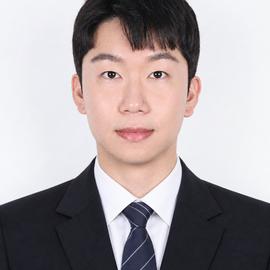
Jaehyeon So (소재현)
PhD student
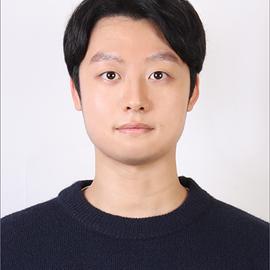
Chanwook Hwang (황찬욱)
Combined MS-PhD student

Woosung Chung (정우성)
Combined MS-PhD student
